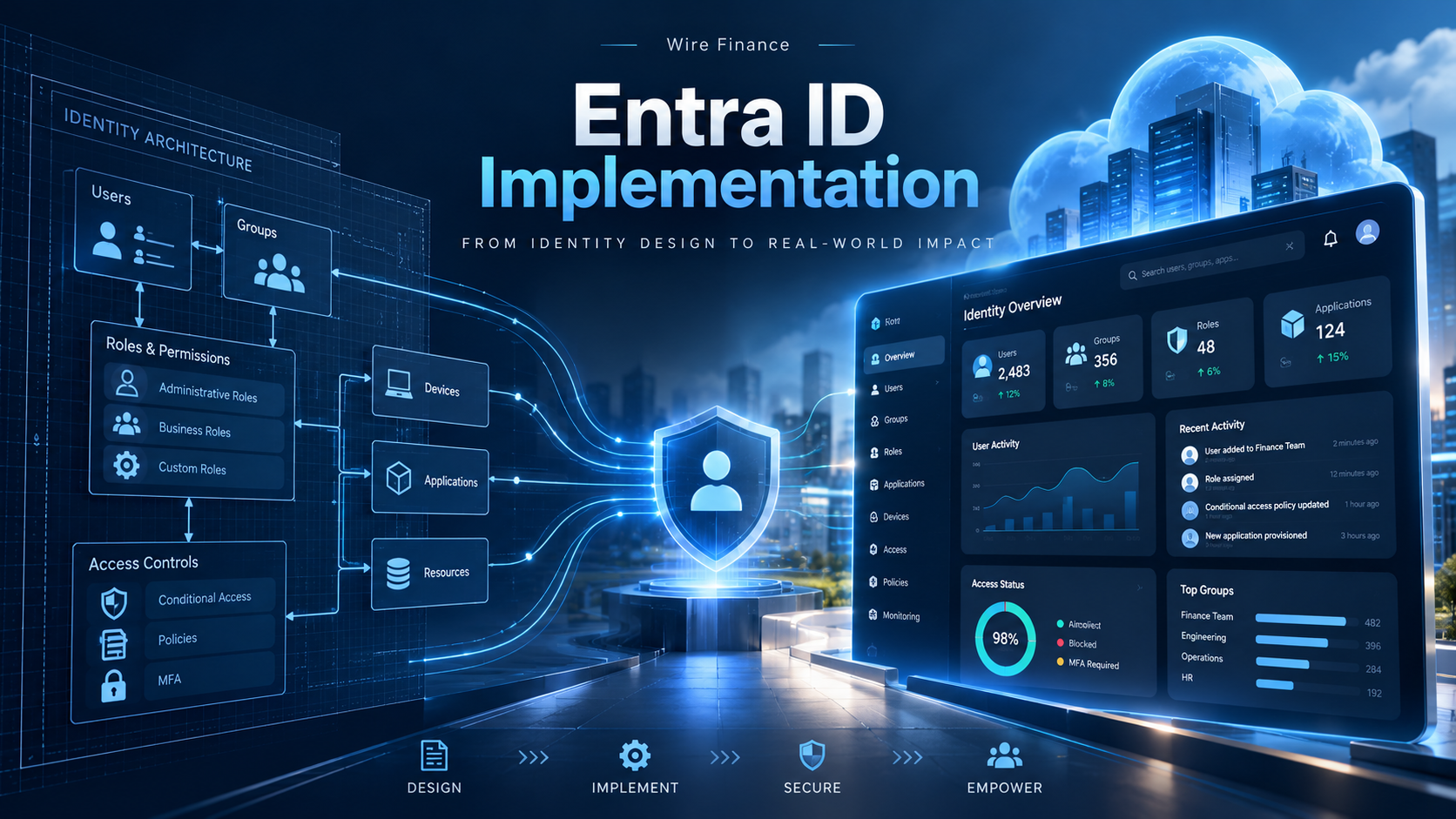
Up to this point, Wire Finance has mostly existed as a design.
We have defined the organisation, established identity types and naming conventions, and designed how access should be organised.
We have separated standard, privileged, and emergency access.
We have also established how identities should be managed when employees join, change responsibilities, and eventually leave.
Now comes the part where those decisions have to survive contact with a real environment.
It is time to build.
From Design to Implementation
A good identity design tells us what the environment should look like.
Implementation tells us whether we can actually make it work.
Wire Finance will now begin translating its IAM model into Microsoft Entra ID.
That means the decisions we made earlier will start becoming real objects and configurations:
Identity Design
       ↓
Environment Setup
       ↓
Tenant Review
       ↓
Group Creation
       ↓
Workforce Identities
       ↓
Administrative Access
       ↓
Authentication and Access Controls
       ↓
Validation, Logging and Monitoring
The goal is not simply to click through a portal until accounts and groups appear.
Every implementation decision should trace back to something we have already designed.
If we create a user, we should know what type of identity it represents.
If we create a group, we should know what business purpose that group serves.
If we assign an administrative role, we should understand why that level of access is required.
And if we configure an authentication control, we should know what risk it is intended to reduce.
That connection between design and implementation is what turns a collection of lab exercises into something much closer to a real organisational environment.
Building the Wire Finance Identity Foundation
The Entra ID implementation will be built in stages.
We will begin by establishing the Microsoft environment and reviewing its starting configuration.
From there, we will implement the group structure, workforce identities, administrative permissions, and security controls needed to support our identity model.
Each stage will build on the one before it.
And throughout the process, we will keep asking the same question:
Does what we are building still match the design?
That matters because implementation has a habit of introducing shortcuts.
A temporary permission becomes permanent.
A test account gets forgotten.
An administrator receives more access than originally intended.
A naming convention gets ignored because creating one object manually seems harmless.
Those small decisions are exactly how clean designs become messy environments.
Wire Finance gives us the opportunity to do something different:
Build deliberately, validate what we configure, and document what actually happens.
The First Step
Before we create users, groups, roles, or authentication policies, we need somewhere controlled to build them.
That means preparing the Microsoft Entra ID environment and understanding the foundation we are about to work with.
The first implementation question is therefore not:
Who should we create first?
It is:
What does the Wire Finance environment need before we start creating anything inside it?
That’s where our implementation journey begins.
Explore the Entra ID Implementation
Entra Environment Setup
Tenant Review
Before building the Wire Finance identity model, we review the Microsoft tenant, verify its capabilities, and establish a starting baseline.
Group Creation
Build Wire Finance's Microsoft Entra security groups before creating employees: dynamic company, department and role groups; assigned pilot, exception and privileged groups; and device groups for Intune and Autopilot.
User Creation
Create and validate Wire Finance's first eight Microsoft Entra workforce identities, including employee IDs, authoritative attributes, pilot group assignments and group-based Microsoft 365 E5 licensing.
Administrative Roles
Separate Microsoft Entra directory roles from Intune and Defender permissions, and verify which Wire Finance privileged-access assignments were actually implemented.
Authentication Methods
Prepare Wire Finance's first employee sign-in using an administrator-generated temporary password, confirm the reset, and distinguish completed onboarding steps from deferred SSPR and MFA controls.
Multifactor Authentication (MFA)
Explain Wire Finance's MFA approach, distinguish method registration from enforcement, and prepare for Microsoft Authenticator during the first employee-device sign-in.
Logging and Monitoring
Learn where Wire Finance identity changes and sign-in attempts can be investigated in Microsoft Entra, and distinguish native audit evidence from the Defender and Sentinel monitoring still to come.